The Role of Physical Exercise in Alzheimer’s Management

Physical exercise is not only beneficial for general health but also plays a significant role in managing Alzheimer’s disease. Regular activity can improve mood, reduce anxiety, and potentially slow cognitive decline. Simple exercises like walking, stretching, or chair yoga are excellent for patients at various stages of Alzheimer’s. Tailor activities to their abilities—even light gardening or dancing can foster engagement and joy.

Caregivers should aim for consistency, integrating exercise into the daily routine to provide structure and reduce confusion. Social forms of exercise, like group walking sessions, also encourage interaction, which is essential for emotional well-being. Safety is paramount—ensure that the environment is secure and monitor the patient to avoid overexertion.

For additional guidance and ideas, consider the following resources:

  • National Institute on Aging: Explore their comprehensive guide to safe and effective exercises for older adults, including Alzheimer’s patients. Visit nia.nih.gov/health/exercise-physical-activity.
  • Go4Life Program: Developed by the National Institute on Aging, this program offers free videos, tips, and guides for incorporating exercise into daily life. Access it at go4life.nia.nih.gov.
  • Alzheimer’s Society (UK): Provides a list of exercise activities tailored for people living with dementia. Learn more at alzheimers.org.uk.
  • YouTube Exercise Channels: Channels like “Chair Yoga with Adriene” or “Eldergym Senior Fitness” offer free, easy-to-follow exercise routines.
  • Local YMCA or Senior Centers: Many offer specialized fitness programs designed for cognitive and physical wellness. Contact your local center for availability.

Incorporating regular physical activity into the care plan not only benefits patients but also provides caregivers with opportunities to engage positively with their loved ones.

Ten Useful Learning Resources on Alzheimer’s Disease

Below is a list of useful resources on Alzheimer’s Disease:

1. What is Alzheimer’s Disease?: https://www.alz.org/alzheimers-dementia/what-is-alzheimers   

2. On the path to 2025: understanding the Alzheimer’s disease continuum: https://pubmed.ncbi.nlm.nih.gov/28793924/

3. Breaking the Alzheimer’s Dementia continuum with Evidence-Based Research: https://alzheimerscontinuum.com/

4. Finding Dementia Care and Local Services: https://www.alzheimers.gov/life-with-dementia/find-local-services 

5. NIH Toolbox: https://www.healthmeasures.net/explore-measurement-systems/nih-toolbox

6. Alzheimer’s and Related Dementias Resources for Professionals: https://www.nia.nih.gov/health/health-care-professionals-information/alzheimers-and-related-dementias-resources

7. Alzheimer’s Disease: Resources for Patients and Families

https://www.ohsu.edu/brain-institute/alzheimers-disease-resources-patients-and-families

8. Trauma Resources for Families: https://www.aap.org/en/patient-care/trauma-informed-care/resources-for-families/

9. Coping With Traumatic Events: https://www.nimh.nih.gov/health/topics/coping-with-traumatic-events

10. Trauma Resource Institute: https://www.traumaresourceinstitute.com/

Deterioration in language can predict early symptoms of Alzheimer’s Dementia.

In a recent study, an independent linguistic battery comprising only the language components or subtests of popular neuropsychological batteries showed a better clinical detection for MCI-AD than using an exhaustive battery of test.

Mild Cognitive Impairment due to Alzheimer’s disease (MCI-AD) is a precursor to Alzheimer’s disease (AD). It is characterized by a cognitive decline usually associated with aging or AD. However, some of the profound characteristics of MCI-AD are the gradual degrading of cognitive speech functions, which is often affected long before the diagnosis of MCI-AD. Research has shown that neurodegenerative disease such as MCI-AD deteriorates nerve cells that control cognitive speech and language processes, affecting an individual’s ability to make effective verbal utterances. As a result, the need for early detection of MCI-AD using linguistic biomarkers has grown. However, it is still prevalent to diagnose MCI-AD utilizing a combination of neuropsychological batteries and a doctor’s longitudinal observation of the individual. In a recent study, an independent linguistic battery comprising only the language components or subtests of popular neuropsychological batteries showed a better clinical detection for MCI-AD than using an exhaustive battery of tests. As confirmed by the study, the figures below compare the underlying patterns of the linguistic components and risk factors of MCI-AD and healthy control groups.

What is the Alzheimer’s Dementia Continuum?

…several findings suggest a possible reversal of AD-type MCI with carefully administered behavioral therapy, including brain-stimulating exercises.

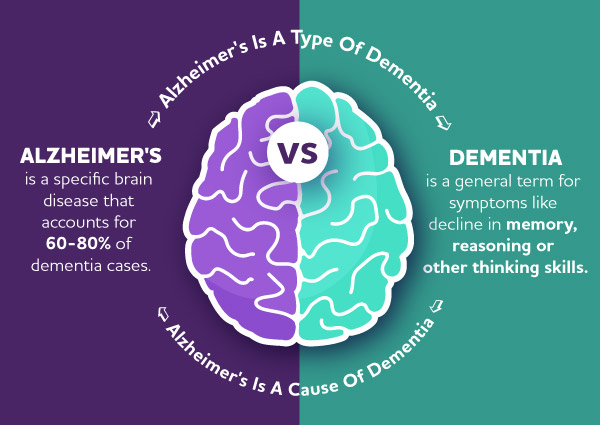
Alzheimer’s disease (AD) is the prodromal stage of Dementia. Imagine the disease as a continuum, beginning with Mild Cognitive Impairment (MCI) to possible/probable AD, and ultimately Dementia, the end-stage. Not all healthy people will have MCI, and not all MCI will result in AD. However, there is research evidence that a substantial proportion of people with AD-type MCI will progress to AD and subsequently Dementia. On the other hand, several findings suggest a possible reversal of AD-type MCI with carefully administered behavioral therapy, including brain-stimulating exercises. In addition to a good diet (the Mediterranean diet preferred), a minimum of 30 minutes of daily exercise, social connectedness (community groups, family, friends), and brain-stimulating exercises have been associated with possible reversal or delay of AD-type Dementia.

The figure below gives a clear overview of the Alzheimer’s disease Dementia continuum.

Overview of Alzheimer’s disease Dementia continuum. Image source: https://www.alz.org/

Below, I provide a list of websites where you can try out different brain-stimulating exercises:

BRAINGLE: Braingle is a place to solve puzzles, brush up on your trivia, play games and give your brain a workout.

brainHQ: American Association of Retired Persons (AARP) brain training exercise.

JigZone: Online Jigsaw Puzzles

Lumosity: Personalized brain training.

WholisticResearch: Brain exercises to improve cognitive performance and memory retention.

For additional information on Alzheimer’s disease and Dementia, visit https://www.alz.org/.

There is hope, even when your brain tells you there isn’t.

John Green